Wednesday, May 11, 2022

Izzy and Easton - Incredibly Touching Soldier Dance

2019 America's Got Talent


11 year old Izzy and 14 year old Easton
They have been dancing for 5 years together.
They are not related


2019 America's Got Talent | Season 14 | Episode 5 | Auditions 5
Their First Appearance - full video


Izzy and Easton - Contemporary Dance


12 year old Sings Aretha!


2019 America's Got Talent | Season 14 | Episode 4 | Auditions 4

12 year old Ansley Burns Sings Aretha!
Simon mixes it up a bit - but Ansley comes out on top!


America's Got Talent | Season 14 | Episode 9 | Judge Cuts 3

And she's back . . . and so is Simon!!!


Ansley Burns : Semifinals Performance

Dancing On The Ceiling - Wonderful Dancing Montage


 Incredible montage of soooo many dances 
from soooo many movies (and TV).
Created By Tony Coates

Listed below is a list of the movies.  So wish they had also listed the actors names.  Some of the real old ones I think you might know . . . they are just too young to recognize!!

To see more montage videos click HERE - when you click on pause, option for more videos shows up.

Films used:
Here’s Lucy (TV show)
Party Girl
Viva Las Vegas
Good News
Affair In Trinidad
Anchors Aweigh
Two Weeks With Love
There’s No Business Like Show Business
The Barkleys Of Broadway
April In Paris
Bedknobs & Broomsticks
The Wiz
Royal Wedding
Road To Utopia
Damn Yankees
Knock On Wood
West Side Story
Salt And Pepper
Breakin’ 2
Way Out West
Yankee Doodle Dandy
Tea For Two
The Harvey Girls
Red Hot And Blue
You Were Never Lovelier
Say One For Me
Hairspray
Houseboat
An American In Paris
Second Chorus
Murderer’s Row
Texas Carnival
Hello Frisco
Kiss Me Kate
A Day At The Race
Big Broadcast Of 1938
Broadway Melody Of 1940
Lovely To Look At
Born To Dance
Small Town Girl
Music Man
Song Of The Islands
Ship Ahoy
Seven Brides For Seven Brothers
Cabin In The Sky
Tap
Strike Up The Band
Annie
A Damsel In Distress
Daughter Of Rosie O’ Grady
Three Little Words
Bloodhounds Of Broadway
Ziegfeld Follies
Stormy Weather
Panama Hattie
That Night In Rio
Half A Sixpence
Mark Of The Renegade
On The Riviera
The Kissing Bandit
Footloose
Ship Of Fools
The Best Things In Life Are Free
Deep In My Heart
Here Come The Waves
Has Anybody Seen My Gal
It’s A Wonderful Life
Singin’ In The Rain
Mame
Dance Girl Dance
La Donna Del Fiume (aka The River Girl)
The Silencers
Hello Dolly
All That Jazz
Fiesta
Flower Drum Song
Sweet Charity
Look For The Silver Lining
Grease
Grease 2
Moon Over Miami
The Swinger
Down To Earth
Xanadu
Oliver
Mary Poppins
Show Boat (1951)
The Tiger & The Pussycat
The Great American Broadcast
The Belle Of New York
The Blues Brothers
Blue Skies
The Muppet Show (TV show)


Friday, April 29, 2022

Our Silver Years

My doctor asked if anyone in my family suffered from mental illness and I said, "No, we all seem to enjoy it


Just once, I want a username and password prompt to say, "Close enough."


Being an adult is the dumbest thing I have ever done.


I'm a multitasker. I can listen, ignore and forget all at the same time


Retirement to do list: Wake up. - I Nailed it!


People who wonder if the glass is half empty or half full miss the point.
The glass is refillable.


Sometimes it takes me all day to get nothing done.


I don't trip, I do random gravity checks.


One minute you're young and fun. Next, you're turning down the car stereo to see better.


Some people are like clouds, once they disappear it's a beautiful day.


Some people you're glad to see coming; some people you're glad to see going.


Common sense is not a gift. It's a punishment because you have to deal with everyone who doesn't have it.


I came. I saw. I forgot what I was doing. Retraced my steps. Got lost on the way back. Now I have no idea what's going on.


If you can't think of a word, say "I forgot the English word for it." That way people will think you're bilingual instead of an idiot.


I'm at a place in my life where errands are starting to count as going out.


I don't mean to brag, but I finished my 14-day diet food supply in 3 hours and 20 minutes.


I may not be that funny or athletic or good looking or smart or talented . . . I forgot where I was going with this.


Having plans sounds like a good idea until you have to put on clothes and leave the house.


It's weird being the same age as those old people.


When I was a kid, I wanted to be older . . . This is not what I expected.


Life is like a helicopter. I don't know how to operate a helicopter either.


It's probably my age that tricks people into thinking I'm an adult.


Never sing in the shower! Singing leads to dancing, dancing leads to slipping, and slipping leads to paramedics seeing you naked. So, remember... don't sing!


I see people my age mountain climbing. I feel good just getting my leg through my underwear without losing my balance.


We all get heavier as we get older, because there's a lot more information in our heads. That's my story anyway.


Tuesday, April 19, 2022

Every American Needs To Hear This Speech - You Want To Succeed in School - You'll Have To Earn It


If every high school principal said this,
it would change students' lives and would change America. 
So what exactly should every high school principal say?


Script:

If every high school principal gave the following speech, America would be a much better place.
To the students and faculty of our high school:
I am your new principal, and honored to be so. There is no greater calling than to teach young people. I would like to apprise you of some important changes coming to our school.

First, this school will no longer honor race or ethnicity. I could not care less if you are black, brown, red, yellow or white. I could not care less if your origins are African, European, Latin American or Asian, or if your ancestors arrived here on the Mayflower or on slave ships.

The only identity this school will recognize is your individual identity—your character, your scholarship, your humanity. And the only national identity this school will recognize is American. This is an American public school, and American public schools were created to make better Americans.

If you wish to affirm here an ethnic or racial identity—or a national identity other than American —you will have to attend another school. This includes after-school clubs. I will not authorize clubs that divide students based on identities such as race, ethnicity, sexual orientation or whatever else may become in vogue in our society. Those clubs cultivate narcissism—an unhealthy preoccupation with the self—while the purpose of education is to get you to think beyond yourself.
This school’s clubs will be based on interests and passions—clubs that transport you to the wonders and glories of art, music, astronomy, languages you do not already speak, and more. If the only extracurricular activities you can imagine being interested in are those based on ethnicity, race or sexual identity, that means that little outside of yourself really interests you.

Second, I do not care whether English is your native language. My only interest in terms of language is that you leave this school speaking and writing English as fluently as possible. The English language has united America’s citizens for over 200 years, and it will unite us at this school. Furthermore, I would be remiss in my duty to ensure that you will be prepared to successfully compete in the job market, if you leave this school without excellent English-language skills. We will learn other languages here—it’s deplorable that most Americans only speak English—but if you want classes taught in your native language rather than in English, this is not the right school for you.
Third, because I regard learning as a sacred endeavor, everything in this school will reflect learning’s elevated status. This means, among other things, that you and your teachers will dress accordingly. There will be a dress code at this school.

And you will address all teachers by their title, not by their first name. They are your teachers, not your pals.

BRAND NEW HAT!!!! Cute Video With Jay Leno


Good Things Happen While The World Struggles


Monday, April 18, 2022

Seniors Have Some Perks, But Life Isn't Always Easy!!

I have everything that I wanted as a teenager, only 60 years later. 
I don't have to go to school or work. 
I get an allowance every month.
I have my own pad. 
I don't have a curfew. 
I have a driver's license and my own car.
The people I hang around with are not scared of getting pregnant and I don't have acne.
Life is great. 

I changed my car horn to gunshot sounds. 
People get out of the way much faster now.
I didn't make it to the gym today. 
That makes five years in a row. 

I decided to stop calling the bathroom "John" and renamed it the "Jim". 
I feel so much better saying I went to the Jim this morning.

Old age is coming at a really bad time.
When I was a child I thought "nap time" was a punishment. 
Now it feels like a small vacation.

The biggest lie I tell myself is... 
. . . . "I don't have to write that down, I'll remember it".

I don't have gray hair... I have "wisdom highlights"! 
I'm just very wise.

If God wanted me to touch my toes, 
He would've put them on my knees.

Last year I joined a support group for procrastinators. 
We haven't met yet.

Why do I have to press one for English when you're just going to transfer me to someone I can't understand anyway?
Of course, I talk to myself. 
Sometimes I need expert advice.

At my age "Getting Lucky" means walking into a room and remembering what I came In there for.

I have more friends I should send this to, but right now I can't remember their names.
Now, I'm wondering... did I send this to you, or did you send it to me?

Saturday, March 12, 2022

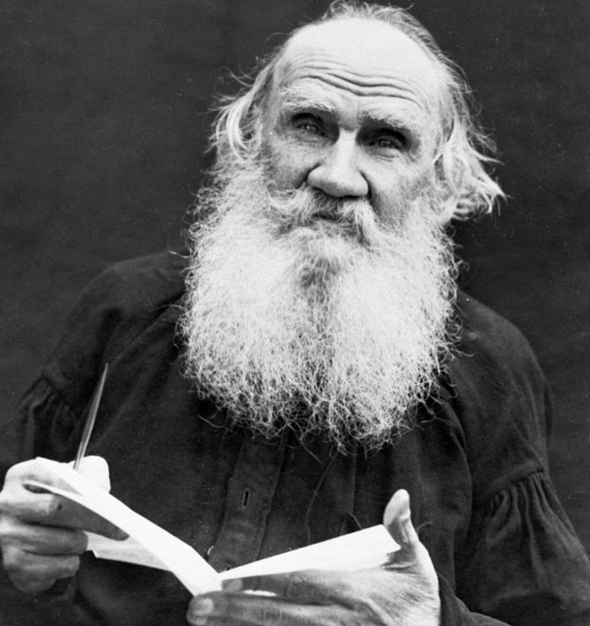
Leo Tolstoy and his Book of Mormon

September 9, 1828 - November 20, 1910

Original story Here

Virginia Woolf once called Leo Tolstoy "the greatest of all novelists."

Through both his writing and his life, Tolstoy became known as a troubled man who devoted himself to the search for life's meaning. He's best known for penning the lengthy "War and Peace" and "Anna Karenina."

So how did a Book of Mormon end up in the library of this Russian literary leviathan?

Frederick and Nataliya Felt were attending the Laurel Ward of the Silver Springs Stake in Washington, D.C., when a Russian member told them that Tolstoy's library contained a copy of the LDS scripture.

Their initial intrigue turned into a quest to discover the story of its origin.

"I was surprised to learn that Tolstoy had a Book of Mormon," Frederick said. "I wondered how (he had obtained it) since the church didn't have missionaries in Russia during his lifetime."

Frederick determined there had to be some kind of inscription on the inside cover and that the information was a "valuable fragment of church history."

Nataliya had a personal interest. She was born in Moscow and knows both the language and the country's rich literary history.

"I knew and respected Tolstoy's works before I joined (the church)," Nataliya said. "I was really happy to know such a talented writer took an interest in the church."

They learned the book was at Yasnaya Polyana, the late author's estate, which is four hours south of Moscow by train. On a partly cloudy day last August, the Felts traveled to Yasnaya Polyana, now a museum operated by the Tolstoy family.

Like stepping back in time, the picturesque, sprawling estate consisted of "fields, forests, barns, apple orchards, stables, servant's quarters and several residences," Frederick said.

A librarian at the museum searched her records and photocopied a catalog reference to the Book of Mormon.

"It identified the exact cabinet, shelf and volume number," Frederick said.

More importantly, the reference indicated that the book was a gift given to Tolstoy by Susa Young Gates, daughter of Brigham Young, women's rights advocate and a writer once referred to by R. Paul Cracroft as "the most versatile and prolific LDS writer ever to take up the pen in defense of her religion."

During her lifetime, Gates carried on intellectual correspondence with Tolstoy, William Dean Howells, Charlotte Perkins Gilman and other prominent literary figures. English Ph.D. Lisa Tait, who has presented at the BYU Studies Symposium on Gates and is currently working on her biography, said she would not be surprised if Gates, as an afficionada of classic literature, got in contact with Tolstoy on impulse.

"Knowing her and her amazing self-assurance, she probably just wrote a letter to him cold," Tait said.

The Felts were eager to see Gates' inscription in the Book of Mormon, but discovered that the museum director, who would have to authorize them to look at or photograph Tolstoy's books, was out of town.

"The secretary invited us to submit a written request for the director's consideration," Felt said. "But when we explained our time constraints, she made a call."

An assistant director approved the Felts' request. The museum curator took them into Tolstoy's office where they pulled on white gloves and were handed Tolstoy's Book of Mormon.

"It was surprisingly heavy," Frederick said. He identified the copy as an 1881 Second Electrotype Edition published in Liverpool, England.

Gates' inscription simply read: "Count Leo Tolstoy, from Susa Young Gates. Salt Lake City, Utah."

He noted that other than the inscription, there were no other notes on any of the pages.

The curator helped the Felts consult Tolstoy's diary, where they found an entry mentioning that he had received the book from Gates and had "read the book."

"Whether Tolstoy meant that he had read the book in its entirety or only in part wasn't clear from the entry," Frederick said.

The Felts took several photographs of both the book itself and the diary page. Upon returning home, digital enhancement of some of the photos showed possible acid marks from fingerprints on the Book of Mormon's title page, "suggesting Tolstoy had paused there to read," Frederick said.

After Tolstoy wrote "Anna Karenina," he experienced intense existential despair and found himself impressed with the faith and devotion of the religious laypeople.

His interest gravitated toward the religion he was born into, the Russian Orthodox church, but he soon abandoned it, convinced that all Christian churches had corrupted Christ's message.

In the same vein, Tolstoy abhorred the persecution of others for their religious beliefs or interpretations of Christianity. He used the royalties of his 1899 novel "Resurrection" to pay for the transportation of a persecuted religious sect, the Dukhobors, to Canada.

Tait pointed out the Christian socialist movement in the late 1800s and how some Mormons felt there were affinities between LDS beliefs, such as the law of consecration, and pre-Communist era socialist ideas.

"It may have been in that vein that Gates contacted Tolstoy," Tait said.

In 1995, Lawrence R. Flake, then an associate professor in the department of church history and doctrine at BYU, gave a devotional address which detailed a conversation Tolstoy had with Andrew Dixon White, co-founder of Cornell University.

Tolstoy was said to have told White: "If Mormonism is able to endure, unmodified, until it reaches the third and fourth generation, it is destined to become the greatest power the world has ever known." While the accuracy of this story cannot be verified, Tolstoy did nurture a lifelong fascination with and rare respect for Mormonism as he struggled with religion and the desire to see all allowed freedom of worship.


Thursday, March 10, 2022

Remarks Concerning the Savages of North America By Benjamin Franklin

Savages we call them, because their Manners differ from ours, which we think the Perfection of Civility. They think the same of theirs.

Perhaps if we could examine the Manners of different Nations with Impartiality, we should find no People so rude as to be without Rules of Politeness, nor any so polite as not to have some Remains of Rudeness

The Indian Men when young are Hunters and Warriors; when old, Counsellors; for all their Government is by Counsel of the Sages; there is no Force there are no Prisons, no Officers to compel Obedience, or inflict Punishment.—Hence they generally study Oratory; the best Speaker having the most Influence. The Indian Women till the Ground, dress the Food, nurse and bring up the Children, & preserve & hand down to Posterity the Memory of public Transactions. These Employments of Men and Women are accounted natural & honorable, Having few artificial Wants, they have abundance of Leisure for Improvement by Conversation. Our laborious Manner of Life compar’d with theirs, they esteem slavish & base; and the Learning on which we value ourselves, they regard as frivolous & useless. An Instance of this occurr’d at the Treaty of Lancaster in Pensilvania, anno 1744, between the Government of Virginia and the Six Nations. After the principal Business was settled, the Commissioners from Virginia acquainted the Indians by a Speech, that there was at Williamsburg a College, with a Fund for Educating Indian youth; and that if the Six Nations would send down half a dozen of their young Lads to that College, the Government would take Care that they should be well provided for, and instructed in all the Learning of the White People. It is one of the Indian Rules of Politeness not to answer a public Proposition the same day that it is made; they think it would be treating it as a light matter, and that they show it Respect by taking time to consider it, as of a Matter important. They therefore deferr’d their Answer till the Day following; when their Speaker began by expressing their deep Sense of the Kindness of the Virginia Government in making them that Offer, for we know, says he, that you highly esteem the kind of Learning taught in those Colleges, and that the Maintenance of our young Men while with you, would be very expensive to you. We are convinc’d therefore that you mean to do us Good by your Proposal, and we thank you heartily. But you who are wise must know, that different Nations have different Conceptions of Things, and you will therefore not take it amiss if our Ideas of this kind of Education happen not to be the same with yours. We have had some Experience of it: Several of our young People were formerly brought up at the Colleges of the Northern Provinces; they were instructed in all your Sciences; but when they came back to us they were bad Runners ignorant of every means of living in the Woods, unable to bear either Cold or Hunger, knew neither how to build a Cabin, take a Deer or kill an Enemy, spoke our Language imperfectly, were therefore neither fit for Hunters Warriors, or Counsellors, they were totally good for nothing. We are however not the less oblig’d by your kind Offer tho’ we decline accepting it; and to show our grateful Sense of it, if the Gentlemen of Virginia will send us a Dozen of their Sons, we will take great Care of their Education, instruct them in all we know, and make Men of them.—

Having frequent Occasions to hold public Councils, they have acquired great Order and Decency in conducting them. The old Men sit in the foremost Ranks, the Warriors in the next, and the Women & Children in the hindmost. The Business of the Women is to take exact Notice of what passes, imprint it in their Memories, for they have no Writing, and communicate it to their Children. They are the Records of the Councils, and they preserve Traditions of the Stipulations in Treaties 100 Years back, which when we compare with our Writings we always find exact. He that would speak rises. The rest observe a profound Silence. When he has finish’d and sits down; they leave him 5 or 6 Minutes to recollect, that if he has omitted any thing he intended to say, or has any thing to add, he may rise again and deliver it. To interrupt another, even in common Conversation, is reckon’d highly indecent. How different this is, from the Conduct of a polite British House of Commons where scarce every person without some confusion, that makes the Speaker hoarse in calling to Order and how different from the Mode of Conversation in many polite Companies of Europe, where if you do not deliver your Sentence with great Rapidity, you are cut off in the middle of it by the Impatients Loquacity of those you converse with, and never suffer’d to finish it—

The Politeness of the Savages in Conversation is indeed carried to Excess, since it does not permit them to contradict or deny the Truth of what is asserted in their Presence; By this means they indeed avoid Disputes, but then it becomes difficult to know their Minds, or what Impression you make upon them. The Missionaries who have attempted to convert them to Christianity, all complain of this as one of the great difficulties of their Mission: The Indians hear with Patience the Truths of the Gospel explain’d to them, and give their usual Tokens of Assent & Approbation: You would think they were convinc’d. No such Matter. It is mere Civility. A Suedish Minister, having assembled the Chiefs of the Saquehanah Indians, made a Sermon to them, acquainting them with the principal historical Facts on which our Religion is founded, such as the Fall of our first Parents by eating an Apple; the Coming of Christ, to repair the Mischief; his Miracles & Suffering, &c. When he had finished, an Indian Orator stood up to thank him. What you have told us, says he, is all very good. It is indeed a bad Thing to eat Apples. It is better to make them all into Cyder. We are much oblig’d by your Kindness in coming so far to tell us these Things which you have heard from your Mothers; in return I will tell you some of those we have heard from ours. In the Beginning our Fathers had only the Flesh of Animals to subsist on, and if their Hunting was unsuccessful, they were starving. Two of our young Hunters having kill’d a Deer, made a Fire in the Woods to broil some Part of it. When they were about to satisfy their Hunger, they beheld a beautiful young Woman descend from the Clouds, and seat herself on that Hill which you see yonder among the blue Mountains. They said to each other, It is a Spirit that perhaps has smelt our broiling Venison & wishes to eat of it: Let us offer some to her. They presented her with the Tongue, She was pleas’d with the Taste of it, and said, Your Kindness shall be rewarded: Come to this Place after thirteen Moons, and you shall find something that will be of great Benefit in nourishing you and your Children to the latest Generations. They did so, and to their Surprise found Plants they had never seen before, but which from that antique time have been instantly cultivated among us to our great Advantage. Where her right Hand had touch’d the Ground they found Maize; Where her left hand had touch’d it, they found Kidney Beans, and where her Backside had rested on it, they found Tobacco.—The good Missionary disgusted with this idle Tale, said, What I delivered to you were sacred Truths, but what you tell me is mere Fable, Fiction and Falshood. The Indian offended, reply’d, My Brother, it seems your Friends have not done you Justice in your Education, they have not well instructed you in the Rules of common Civility. You saw that we who understand and practise those Rules, believ’d all your Stories: Why do you refuse to believe ours?— [interleaved is a sheet with no writing, but a sketch of what appears to be a hot air balloon]

When any of them come into our Towns, our People are apt to croud round them, gaze upon them, & incommode them where they desire to be private; this they esteem great Rudeness, the Effect of & Want of Instruction in the Rules of Civility & good Manners. We have, say they, as much Curiosity as you, and when you come into our Towns, we wish for Opportunities of looking at you; but for this purpose we hide our Selves behind Bushes where you are to pass, and never intrude ourselves into your Company.—

Their Manner of entring one anothers villages has likewise its Rules. It is reckon’d uncivil in travelling Strangers to enter a Village abruptly, without giving Notice of their Approach. Therefore as soon as they arrive within Hearing, they stop & hollow, remaining there till invited to enter. Two old Men usually come out to them, and lead them in. There is in every Village a vacant Dwelling called the Strangers House. Here they are plac’d, while the old Men go round from Hut to Hut, acquainting the Inhabitants that Strangers are arriv’d who are probably hungry & weary; and every one sends them what he can spare of Victuals & Skins to repose on. When the Strangers are refresh’d, Pipes & Tobacco are brought, and then, but not before, Conversation begins, with Enquiries who they are, whither bound, what News, &c. and it usually ends with Offers of Service if the Strangers have occasion of Guides or any Necessaries for continuing their Journey, and nothing is exacted for the Entertainment.

The same Hospitality esteem’d among them as a principal Virtue, is practic’d by private Persons, of which Conrad Weiser, our Interpreter gave me the following Instance. He had been naturaliz’d among the Six Nations, & spoke well the Mohock Language. In going thro’ the Indian Country to carry a Message from our Governor to the Council at Onondaga, he call’d at the Habitation of Canasetego an old Acquaintance, who embrac’d him, spread Furs for him to sit on, plaid before him some boil’d Beans & Venison, and mix’d some Rum & Water for his Drink. When he was well refresh’d, and had lit his Pipe, Canassetego began to converse with him, ask’d how he had fard the many Years since they had seen each other, whence he then came, what occasion’d the Journey, &c. &c. Conrad answer’d all his Questions, & when the Discourse began to flag, the Indian to continue it, said, Conrad, you have lived long among the white People and know something of their Customs. I have been sometimes at Albany, and have observed that once in Seven Days they shut up their Shops, and assemble all in the great House; tell me, what is it for? what do they do there?—They meet there, says Conrad, to hear and learn good Things. I do not doubt says the Indian, that they tell you so: They have told me the same; But I doubt the Truth of what they say, and I will tell you my Reasons. I was lately to Albany to sell my Skins, & buy Blankets, Knives, Powder &c Rum &c You know I us’d generally to deal with Hans Hanson, but I was a little inclin’d this time to try some other Merchant; however, I call’d first upon Hans, & ask’d him what he would give for Beaver. He said he could not give more than four Shillings a Pound; but says he I cannot talk on Business now; this is the Day when we meet together to learn good Things, and I am going to the Meeting. So I thought to my self, since we cannot do any Business to day, I may as well go to the Meeting too; and I went with him. There stood up a Man in Black, and began to talk to the People very angrily. I did not understand what he said; but perceiving that he look’d much at me, and at Hanson, I imagin’d he was angry at seeing me there, so I went out, sat down near the House, struck Fire and lit my Pipe, waiting till the Meeting should break up. I thought too that the Man had mention’d something of Beaver, & I suspected it might be the Subject of their Making. so when they came out, I accosted my Merchant, Well, Hans, says I, I hope you have agreed to give more than four Shillings a Pound. No, says he, I cannot give so much; I cannot give more than three shillings & sixpence. I then spoke to several other Dealers, but they all sung the same Song. Three & sixpence, Three & sixpence. This made it clear to me that my Suspicion was right; and that whatever they pretended of meeting to learn Good Things, the real purpose was to consult how to cheat Indians on the Price of Beaver. Consider but a little, Conrad, and you must be of my Opinion. If they met so often to learn Good Things, they would certainly have learnt some before this time. But they are still ignorant. You know our Practice. If a white Man in travelling thro’ our Country, enters one of our Cabins, we all treat him as I treat you; we dry him if he is wet, we warm him if he is cold, we give him Meat & Drinks that he may allay his Thirst and Hunger, and spread soft Furs for him to rest & sleep on: We demand nothing in return. But if I go into a white Man’s House at Albany, and ask for Victuals & Drink, they say, where is your Money? and if I have none; they say, Get out you Indian Dog. You see they have not yet learnt those little Good Things, that we need no Meetings to be instructed in, because our Mothers taught them to us when we were Children: And therefore, it is impossible their Meeting, Should be as they say, for any such purpose, or have any such Effect. They are only to contrive the Cheating of Indians in the Price of Beaver.—

1782-1783