Showing posts with label USA. Show all posts

Friday, September 25, 2020

What Was It Like 100 Years Ago Today? The 1920's

March 31, 2020 - by Amie Tennant

Find original article here:


What was life like in the United States 100 years ago today? The year 1920 ushered in a new decade and brought new innovations and a life of abundance. Let’s take a trip to the past and see what life was like for your ancestors 100 years ago today!


Life Expectancy Was Shorter

In the United States, the life expectancy for men in 1920 was around 53.6 years. For women, it was 54.6 years. If you compare that number to today’s average life expectancy of 78.93 years, you can see just how much better we are doing! The main causes of death in 1920 were heart disease, pneumonia, and tuberculosis.
The World Was Recovering from a Pandemic

By 1920, the world was just coming out of one of the greatest pandemics it had ever known. This flu, H1N1, known as the Spanish flu, infected about 27 percent of the world’s population. It is estimated to have killed at least 50 million people.


The Automobile Industry Was Born


As the decade progressed, the 1920s invited increased prosperity due in major part to manufacturing jobs in the automotive industry. Additionally, the automotive industry led to steel production, highway building, and more.

The automotive industry also introduced assembly-line work. Because companies such as Ford were using this new assembly-line technology, they were able to hire cheaper, less-skilled laborers. Many companies filled those positions with women.


Alcohol Was Prohibited

The 18th Amendment to the United States Constitution went into effect on January 16, 1920. This amendment outlawed the production and consumption of alcohol and is commonly known as Prohibition.

Many historians believe that it was during this time that organized crime began to increase. Black market alcohol, bootleggers, moonshiners, and speakeasies were part of the landscape of the 1920s.

Women Could Finally Vote


The 19th Amendment was also ratified in 1920. In February of 1920, Carrie Chapman Catt founded the League of Women Voters in Chicago, Illinois. By August, the 19th Amendment had passed and gave women the right to vote in the United States. The League of Women Voters was created to encourage women to use their newfound influence at the voting polls. It is still a functioning organization today.

Radios Were a Main Source of Entertainment


Today’s average family may prefer a binge-worthy television series, but 100 years ago the American family could be found huddled around the radio in living rooms across the nation. The first commercial radio station in the United States was Pittsburgh’s KDKA. Within a few short years, there were more than 500 stations across America.

Jazz and Dance Clubs Were All the Rage


Radio programs broadcasted the news, sports, comedy, and music. The 1920s sparked a musical plethora of new styles such as jazz, blues, Broadway, and dance bands.

With the introduction of fun, edgy music, many young people gravitated to dance clubs and roadhouses to socialize. They could gather with their friends and enjoy all the latest in music and dance steps such as the Charleston, black bottom, shimmy, fox-trot, and the Lindy Hop!

Hats Were Essential to Fashion

Just like now, 100 years ago today men and women dressed for the occasion. In other words, a woman might wear a traditional housedress while at home with her family. This simple cotton dress may have been made with colorful plaids or stripes and was comfortable for doing chores. But when a woman needed to run errands, she may have donned a “walking suit” or “day dress.”

A lady would never be without her hat and gloves. These accessories were essentials in every woman’s wardrobe. From her bobbed styled hair to her Mary Jane sensible-heeled shoes, women of the 1920s had style and dressed appropriately for every event.

Men’s fashion began to take on a more casual appearance in the 1920s too. Although the traditional business suit was still common, Grandpa may have tried a sportier trend with “oxford bag” pants and V-neck sweaters.

Hats were a must for every man and served as a symbol of social status


The Most Popular Occupations

At the beginning of 1920, women typically worked as teachers, nurses, and maids, while men were mostly farmers, doctors, lawyers, and bankers.

A hundred years ago seems very far away, but there are still some similarities to the way we live now. Where were your ancestors living 100 years ago? Search for them today in the United States 1920 federal census!

1910s Fashion: Clothing Worn 1910–1919


Amie Tennant

Amie Bowser Tennant is a genealogy researcher, writer and presenter.She writes blog articles and other content for many top companies and societies in the genealogy field. Her most treasured experience is working as a consultant for family history. Amie lives with her husband and three children in Ohio, surrounded by many of her extended family.


Thursday, September 26, 2013

American Cities A Century ago - PRICELESS

 Professional photographers took these pictures... Note how sharp and clear most of the photos are and these are over 100 years old.  There aren't many old photos as good, remember they didn't have film or digital photo cards in those days.  Most probable is that these were glass plate images and taken thru a pin hole type camera and the opening was timed just right to get a dark enough exposure.  Developing was another tedious task which they had to be careful not to break the glass. 
  
American Cities a Century ago

I wish I could make these the original size, as they are huge and so much easier to see.
 Woodward Avenue, Detroit, Michigan, in 1917.

 Atlantic City, 1910.

 The main street of Memphis, north of Avenue Gayoso, 1910.

 Station Louisville-Nashville, Florida, in 1910.

 Forsyth Street, Jacksonville, Florida, in 1910.

 The beach in Atlantic City, 1915.

 Grant Avenue after an earthquake in San Francisco in 1906.

 Carts for transporting dairy Thompson, Washington, 1927.
 Washington, DC, 1914.

 Cadillac Square, Detroit, Michigan, 1916.

Ninth Street, Washington DC, 1915.


 Main Street, Richmond, VA
Corner of Fifth Avenue and 42nd Street, New York, 1910.


 Broad Street north of Spruce Street, Philadelphia, 1905.

 View of Manhattan Bridge from Brooklyn in 1909.

 Fire at 55th Street, New York, 1915.

 Fifth Avenue, New York, 1913.

 Wabash Avenue, Chicago, 1907.

 The New York Public Library, New York, 1915.

 Wall Street, New York, 1911.

 Fifth Avenue, New York, 1913.

 Manhattan, 1907.

 The northern part of Fifth Avenue, New York, 1913.

 City Hall City Hall in New York.

 Dexter Avenue and the Capitol, Montgomery, Alabama, in 1906.

 Valnut Street, Cincinnati, Ohio, 1910.

 Washington, DC, 1913.


Broadway and the building of The Times, New York, 1915.

Monday, November 26, 2012

1910 Ford Model R

1910  Ford Model R
    Show  this to your friends, children and/or  grandchildren!


          THE YEAR IS 1910

This will boggle your mind, I know it did mine!
************ ********* ***********
The year is 1910 
One hundred years ago. 
What a difference a century makes! 
Here are some statistics for the Year 1910:
************ ********* ***********

The average life expectancy for men was 47 years.

Fuel for this car was sold in drug stores only.

Only 14 percent of the homes had a bathtub.

Only 8 percent of the homes had a telephone.

There were only 8,000 cars and only 144 miles of paved roads.

The maximum speed limit in most cities was 10 mph.

The tallest structure in the world was the Eiffel Tower!

The average US wage in 1910 was 22 cents per hour.

The average US worker made between $200 and $400 per year.

A competent accountant could expect to earn $2000 per year, A dentist $2,500 per year, a veterinarian between $1,500 and $4,000 per year, and a mechanical engineer about $5,000 per year.

More than 95 percent of all births took place at HOME .

Ninety percent of all Doctors had NO COLLEGE EDUCATION!  Instead, they attended so-called medical schools, many of which Were condemned in the press AND the government as 'substandard.'

Sugar cost four cents a pound.

Eggs were fourteen cents a dozen.

Coffee was fifteen cents a pound.

Most women only washed their hair once a month, and used Borax or egg yolks for shampoo.

Canada passed a law that prohibited poor people from entering into their country for any reason.

The Five leading causes of death were:

1. Pneumonia and influenza 
2. Tuberculosis 
3. Diarrhea 
4. Heart disease 
5. Stroke

The American flag had 45 stars ...

The population of Las Vegas , Nevada , was only 30!!!!

Crossword puzzles, canned beer, and iced tea hadn't been invented yet.

There was no Mother's Day or Father's Day.

Two out of every 10 adults couldn't read or write and

Only 6 percent of all Americans had graduated from high school..

Marijuana, heroin, and morphine were all available over the counter at the local corner drugstores.

Back then pharmacists said, 'Heroin clears the complexion, gives buoyancy to the mind, Regulates the stomach and bowels, and is, in fact, a perfect guardian of health'  ( Shocking?)

Eighteen percent of households had at least one full-time servant or domestic help ....

There were about 230 reported murders in the ENTIRE U.S.A. !

I am now going to forward this to someone else without typing it myself.
From there, it will be sent to others all over the WORLD - all in a matter of seconds!

Try to imagine what it may be like in another 100 years.

IT STAGGERS THE MIND
                     July 2010


I looked up the population for 1910 in the US and it was 92,228,496

1910 United States Census


Saturday, July 7, 2012

Our Country's REAL Christian Roots


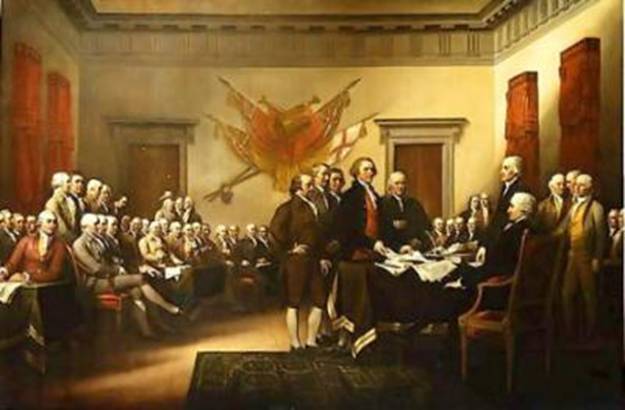
Did you know that  52 of the 55 signers of
The Declaration of Independence were orthodox,
deeply committed Christians?
The other three all believed in the Bible as  the divine truth,
the God of scripture, and His personal intervention.  


  It is the same congress that formed 
the American Bible Society.
Immediately after creating the  

Declaration of Independence,
the Continental Congress voted to purchase
and import 20,000 copies of scripture 

for the people of this nation.  


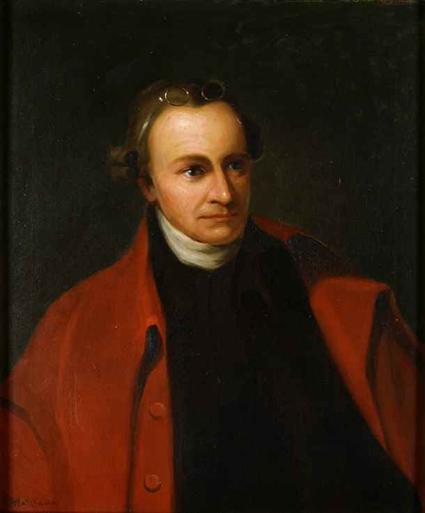
  Patrick Henry, 
who is called the firebrand of the American Revolution,
is still remembered for his words,
'Give me liberty or give me death.'
But in current textbooks, 

the  context of these words is deleted.
Here is what he said:
'An appeal to arms and the God of hosts 

is all that is left us.
But we shall not fight our battle alone.
There is a just God that presides 

over the destinies of nations.
The battle sir, is not of the strong alone.
Is life so dear or peace so sweet as to be purchased 

at the price of chains and slavery?
Forbid it almighty God.
I know not what course others may take,
but as for me, give me liberty, or give me death.'  

These sentences have been erased from our textbooks.


Was Patrick Henry a Christian? 
The following year, 1776, he wrote this:
 'It cannot be emphasized too strongly or too often
that this great nation was founded not by religionists,
but by Christians; not on religion, 

but on the Gospel of Jesus Christ.
For that reason alone,
people of other faiths have been 

afforded freedom of worship here.'


Consider these  words that Thomas Jefferson wrote 
on the front of his well-worn Bible:  


'I  am a Christian, 
that is to say a disciple of the doctrines of Jesus.
I  have little doubt that our whole country 

will soon be rallied to the unity of our Creator and,
I hope, to the pure doctrine of Jesus also.'


Consider these words from 
George Washington,
the Father of our Nation,
in his farewell speech on 

September 19, 1796:
'It is impossible to govern the world 
without God and the Bible.
Of all the dispositions and habits 

that lead to political prosperity,
our religion and morality 

are the indispensable supporters.
Let us with caution indulge the supposition 

that morality can be maintained without religion.
Reason and experience both forbid us to 

expect that our national morality
can prevail in exclusion of religious principle.'  


Was  George Washington a Christian? 
Consider these words from his personal prayer book:

'Oh, eternal and everlasting God, 

direct my thoughts, words and work.
Wash away my sins in the immaculate blood 

of the lamb and purge my heart by the Holy Spirit.
Daily, frame me more and more in the likeness of thy son, 

Jesus Christ,
that living in thy fear, and dying in thy favor,
I may in thy appointed time obtain the resurrection 

of the justified unto  eternal life.
Bless, O Lord, the whole race of mankind and
let the world be filled with the knowledge 

of thy son, Jesus Christ.


Consider these  words by John Adams, our second president,
who also served as chairman of  the American Bible Society.
In  an address to military leaders he said,
'We have no government armed with the power 

capable of contending with human passions,
unbridled by morality and true religion.
Our constitution was made only for a 

moral and religious people.
It is wholly inadequate to the 

government of any other.'  


How about our first Court Justice, John Jay?
He  stated that when we select our national leaders,
if we are to preserve our Nation, 

we must  select Christians.
'Providence has given to our people 

the choice of their rulers
and it is the duty as well as the privilege
 and interest of our Christian Nation to select
and prefer Christians for their rulers.'


John Quincy Adams, son of John Adams, was the sixth U.S. President. 
He  was also the chairman 
of the American Bible Society,
(which he considered his highest 

and most important role).
On July 4, 1821, President Adams said,
'The highest glory of the American Revolution was this:
it connected in one indissoluble bond 

the principles of civil government
with the  principles of Christianity.'

Calvin Coolidge, our 30th President of the United States 
reaffirmed this  truth when he wrote,
'The  foundations of our society
and our government rest so much 

on the  teachings of the Bible
that it would be difficult to support them 

if faith in these teachings
would cease to be practically 

universal in our country.'


  In 1782, the United States Congress 
voted this resolution:
'The congress of the United States 

recommends and approves the 
Holy Bible for use in all  schools.'


William Holmes McGuffey is the author 
of the McGuffey Reader,
which was u
sed for over 100 years in our public schools 
with over 125 million copies sold until it was stopped in 1963.
President Lincoln called him the 'Schoolmaster of the Nation.'
  Listen to these  words of Mr. McGuffey:
'The Christian religion is the religion of our country.
From it are derived our notions on character of God,
on the great moral Governor of the universe.
On its doctrines are founded the peculiarities 

of our free institutions.
From no source has the author drawn more 

conspicuously than from the sacred Scriptures.
From all these extracts from the Bible I make no apology.'


Of the first 108 universities 
founded in America,
106 were distinctly Christian,
including the first,

Harvard  University 

chartered in 1636
In the original 
Harvard Student Handbook,
rule number one 

was that students seeking
entrance must know 

Latin and Greek
so  that they could 

study the scriptures:  


'Let every student be plainly instructed 
and earnestly pressed to consider well,
the main end of his life and studies is, 
to know God and Jesus Christ,
which is eternal life, John 17:3;
and therefore to lay Jesus Christ as the only 
foundation of all sound knowledge and learning.
And seeing the Lord only giveth wisdom,
let everyone seriously set himself by prayer 
in secret to  seek it of him
(Proverbs 2:3).'
For over 100  years, more than 50% 
of all Harvard graduates were pastors! 


It is clear from history that the Bible 
and the Christian faith were foundational 
in our educational and judicial system.
 However in 1947, there was a radical 
change of direction in the Supreme Court. 
Here is the prayer that was banished:
'Almighty God, we acknowledge 

our dependence on Thee.
We beg Thy blessings upon us and our parents 
and our teachers and our country.  Amen.'

  
 In 1963, the Supreme Court 

ruled that Bible reading
was outlawed as unconstitutional 

in the public school system.
The court offered this justification:
'If portions of the New Testament 

were read without explanation,
they could and have been 

psychologically harmful to  children.'
Bible reading was now unconstitutional,
though the Bible was quoted 94% of the time 
by those who wrote our constitution
and shaped our Nation and its system of education 
and justice and government.


In 1965, the Courts denied as unconstitutional 
the rights of a student in the public school cafeteria 
to bow his head and pray audibly for his food.
 In 1980, Stone vs. Graham outlawed 
the Ten Commandments in our public schools.  


  The Supreme Court said this:
'If the posted copies of the Ten Commandments 
were to have any effect at all,
it would be to induce school children to read them.
And if they read them, meditated upon them, 
and perhaps venerated and observed them,
this is not a permissible objective.'
 Is it not a permissible objective to allow our children
to follow the moral principles of the Ten Commandments?


James Madison,  the primary author of the 
Constitution of the United States, said this:
'We have staked the whole future of our new nation,
not upon the power of government; far from it.
We have staked the future of all our political constitutions
upon the capacity of each of ourselves to govern ourselves
according to the moral principles of the Ten Commandments.'
Today we are asking God to bless America.
But how can He bless a Nation 
that has departed so far from Him?
Most  of what you read in this article 


has been erased from our textbooks.
Revisionists have rewritten history 
to remove the truth about our country's Christian roots.
I, Mary Jones, the designer of this web page,  
encourage all who read and agree with the words herein, 
to share it with others, so that the truth 
of our nation's history may be told.


The original web site that this came from 
is no longer available.
But we know it was done by:
Mary Jones.


May 2008