Showing posts with label tribute. Show all posts

Tuesday, June 17, 2025

Inspiring 4th of July Quotes

Patriotic 4th of July Quotes

“Liberty and independence forever.”
Davy Crockett

“The secret of happiness is freedom, the secret of freedom is courage.”
Carrie Jones

“The legacy of brave men and women who have fought and died for their country is the freedom we enjoy as Americans.”
Lucian Adams

“We hold these truths to be self-evident, that all men are created equal, that they are endowed by their Creator, with certain unalienable Rights, that among these are Life, Liberty and the pursuit of Happiness.”
The Declaration of Independence, 1776

“Ask not what your country can do for you — ask what you can do for your country.”
John F. Kennedy

“It’s a party in the U.S.A.”

Miley Cyrus, “Party in the U.S.A.”

“He who is brave is free.”
Lucius Annaeus Seneca

“America is a tune. It must be sung together.”
Gerald Stanley Lee

“Remember, remember always, that all of us, and you and I especially, are descended from immigrants and revolutionists.”
Franklin D. Roosevelt

“You never completely have your rights, one person, until you all have your rights.”
Marsha P. Johnson

“Freedom is nothing else but a chance to be better.”
Albert Camus

“Liberty is the breath of life to nations.”
George Bernard Shaw

“I was born an American; I will live an American; I shall die an American!”
Daniel Webster

“Only in America
Where we dream in red, white and blue
Only in America
Where we dream as big as we want to.”

Brooks & Dunn, “Only in America”

“The happiness of America is intimately connected with the happiness of all mankind; she is destined to become the safe and venerable asylum of virtue, of honesty, of tolerance, and quality and of peaceful liberty.”
Marquis de Lafayette

“Happy 4th of July! This country of immigrants, religious refugees, outcasts and dreamers has come a long way. Let’s keep going.”

Ellen DeGeneres

“Nothing but harmony, honesty, industry, and frugality are necessary to make us a great and happy people.”
George Washington

“Liberty has never come from the government. Liberty has always come from the subjects of it. The history of liberty is a history of resistance.” 
Woodrow Wilson

“Liberty has been planted here; and the more it is attacked, the more it grows and flourishes.”
Samuel Sherwood

“True heroism is remarkably sober, very undramatic. It is not the urge to surpass all others at whatever cost, but the urge to serve others at whatever cost.”
Arthur Ashe

“Those who deny freedom to others, deserve it not for themselves.”
Abraham Lincoln


Funny 4th of July Quotes

“Freedom is the right to tell people what they do not want to hear.”
George Orwell

“Americans will put up with anything, provided it doesn’t block traffic.”
Dan Rather

“America’s a family. We all yell at each other. It all works out.”
Louis C. K.

“Today is the 4th of July, when we honor the day that Uncle Sam chopped down Benedict Arnold at the Alamo. Happy hot dogs!”
Stephen Colbert

“Let’s kick the tires and light the fires, big daddy!”

Captain Jimmy Wilder, “Independence Day”

“Just found out that every Fourth of July, the British celebrate, ‘We Dodged a Bullet Day.’”
Conan O’Brien

“Oh my gosh, you look like the Fourth of July! Makes me want a hot dog real bad.” 
Paulette Parcelle, “Legally Blonde 2: Red, White and Blonde”


Short Fourth of July Quotes

“We shall go wild with fireworks ... And they will plunge into the sky and shatter the darkness.”
Natsuki Takaya

“One flag, one land, one heart, one hand, one nation, evermore!”
Oliver Wendell Holmes

“May we think of freedom, not as the right to do as we please, but as the opportunity to do what is right.”
Peter Marshall

“I only regret that I have but one life to lose for my country.”

Nathan Hale

“Freedom (n.): To ask nothing. To expect nothing. To depend on nothing.”

Ayn Rand, “The Fountainhead”

“Liberty has been planted here; and the more it is attacked, the more it grows and flourishes.”
Samuel Sherwood

“America is another name for opportunity.”
Ralph Waldo Emerson

“All great change in America begins at the dinner table.”
Ronald Reagan

“This nation will remain the land of the free only so long as it is the home of the brave.”
Elmer Davis

“Who ever walked behind anyone to freedom? If we can’t go hand in hand, I don’t want to go.”
Hazel Scott

“It is impossible to conquer a nation determined to be free!”
Thomas Paine


Inspirational 4th of July Quotes

“Let us therefore animate and encourage each other, and show the whole world that a Freeman, contending for liberty on his own ground, is superior to any slavish mercenary on earth.”
George Washington

“We’re blessed with the opportunity to stand for something — for liberty and freedom and fairness. And these are things worth fighting for, worth devoting our lives to. And we have good reason to be hopeful and optimistic.”
Ronald Reagan

“Find a moment, just a simple moment, to close your eyes and think of the men and women who protect the freedoms you enjoy. It’s a privilege, not a right.”
Matthew Lillard


“History is entirely created by the person who tells the story.”
Lin Manuel Miranda

“Independence Day: freedom has its life in the hearts, the actions, the spirit of men and so it must be daily earned and refreshed — else like a flower cut from its life-giving roots, it will wither and die.”
Dwight D. Eisenhower

“In America, nobody says you have to keep the circumstances somebody else gives you.”
Amy Tan, “The Joy Luck Club”

“America was not built on fear. America was built on courage, on imagination and an unbeatable determination to do the job at hand.”

Harry Truman

“Surely, in the light of history, it is more intelligent to hope rather than to fear, to try rather than not to try. For one thing we know beyond all doubt: Nothing has ever been achieved by the person who says, ‘It can’t be done.’”
Eleanor Roosevelt

“When Freedom from her mountain height 
Unfurled her standard to the air 
She tore the azure robe of night 
And set the star of glory there.”
Joseph Rodman Drake,  “The American Flag”

“The happiness of America is intimately connected with the happiness of all mankind; she is destined to become the safe and venerable asylum of virtue, of honesty, of tolerance, and quality and of peaceful liberty.”
Marquis de Lafayette

“Give me the liberty to know, to utter, and to argue freely according to conscience, above all liberties.”

John Milton, “Areopagitica”

“Courage is more exhilarating than fear and in the long run it is easier. We do not have to become heroes overnight. Just one step at a time, meeting each thing that comes up, seeing it is not as dreadful as it appeared, discovering we have the strength to stare it down.”
Eleanor Roosevelt

“Wherever the standard of freedom and independence has been or shall be unfurled, there will be America’s heart, her benedictions and her prayers be.”

John Quincy Adams


“Humanity has won its battle. Liberty now has a country.”
Marquis de Lafayette

“Patriotism consists not in waving the flag, but in striving that our country shall be righteous as well as strong.”

James Bryce

“Happy 4th of July! As you take this day to honor America, ask yourself, “Why am I not honoring America on the other 364 days? Shame on me.”
Stephen Colbert


From THIS website

Thursday, June 25, 2020

The Boy on the Beach - Omaha Beach 2014

https://pinearts.smugmug.com/The-Boy-on-the-Beach-Omaha-Beach-2014/i-vPVMh5F/A

I did not shoot this video.
I did title it and post it here for memorial Day 2020.
I thought it was appropriate for the times.  Maybe it will remind viewers of how we are as Americans and how we got here.

On June 6, 1944 thousands of young men of every race, color and creed risked their lives for something they had in common that was worth saving.  Everyone of their lives mattered, and they succeeded, at great cost.
The message here is not only to remember the young me who gave their lives for us that day, but also that we are still Americans, we are still Americans, and we still have something precious that is worth saving.

The video was done as part of project vigil - started by The Boy On The Beach and his father in 2013.  Al I know is that the boy's name is Richie.  He is now 17 years old (in 2020). You can learn more about project vigil at:
http://www.projectvigil.com/


Friday, September 13, 2019

9/11 Helluva Tribute!!!


Saw a pretty amazing thing tonight at the gym. 

This firefighter was on the stair climber in full equipment, including his mask and oxygen tank. After about a half hour, I saw him finishing and taking his gear off so I went over to tell him how much I respected what he was doing. I figured he was training for a firefighter exam, but when I commented on it, he exclaimed - 
"110 floors! Took me 30 minutes, 10 seconds." 

110 floors.... It's September 11 and he had just climbed the equivalent of 110 floors like the firefighters did in the World Trade Center. Apparently, this is a tradition that many firefighters do to honor the 343 firefighters who lost their lives in the line of duty that day. It's a helluva tribute!

Thursday, September 6, 2018

The Meaning of the FLAG-Draped Coffin


All Americans should be given this lesson.

Our founding fathers used GOD's word and teachings to establish our Great Nation and I think it's high time Americans get re-educated about this Nation's history.

Here is how to understand the flag that laid upon it and is surrendered to so many widows and widowers: Do you know that at military funerals, the 21-gun salute stands for the sum of the numbers in the year 1776?

Have you ever noticed that the honor guard pays meticulous attention to correctly folding the United States of America Flag 13 times? You probably thought it was to symbolize the original 13 colonies, but we learn something new every day!

The 1st fold of the flag is a symbol of life.

The 2nd fold is a symbol of the belief in eternal life.

The 3rd fold is made in honor and remembrance of the veterans departing the ranks who gave a portion of their lives for the defense of the country to attain peace throughout the world.

The 4th fold represents the weaker nature, for as American citizens trusting in God, it is to Him we turn in times of peace as well as in time of war for His divine guidance.

The 5th fold is a tribute to the country, for in the words of Stephen Decatur, 'Our Country, in dealing with other countries, may she always be right; but it is still our country, right or wrong.'

The 6th fold is for where people's hearts lie. It is with their heart that they pledge allegiance to the flag of the United States of America , and the Republic for which it stands, one Nation under God, indivisible, with Liberty and Justice for all.

The 7th fold is a tribute to its Armed Forces, for it is through the Armed Forces that they protect their country and their flag against all her enemies, whether they be found within or without the boundaries of their republic..

The 8th fold is a tribute to the one who entered into the valley of the shadow of death, that we might see the light of day.

The 9th fold is a tribute to womanhood, and Mothers. For it has been through their faith, their love, loyalty and devotion that the character of the men and women who have made this country great has been molded.

The 10th fold is a tribute to the father, for he, too, has given his sons and daughters for the defense of their country since they were first born.

The 11th fold represents the lower portion of the seal of King David and King Solomon and glorifies in the Hebrews eyes, the God of Abraham, Isaac and Jacob.

The 12th fold represents an emblem of eternity and glorifies, in the Christians eyes, God the Father, the Son and Holy Spirit.

The 13th fold, or when the flag is completely folded, the stars are uppermost reminding them of their Nations motto, 'In God We Trust.'

After the flag is completely folded and tucked in, it takes on the appearance of a cocked hat, ever reminding us of the soldiers who served under General George Washington, and the Sailors and Marines who served under Captain John Paul Jones, who were followed by their comrades and shipmates in the Armed Forces of the United States, preserving for them the rights, privileges and freedoms they enjoy today.

There are some traditions and ways of doing things that have deep meaning.

In the future, you'll see flags folded and now you will know why.

Please share this with the children you love and all others who love what is referred to as the symbol of 'Liberty and Freedom.'

MAYBE THE SUPREME COURT SHOULD READ THIS EXPLANATION BEFORE THEY RENDER THEIR DECISION ON THE PLEDGE OF ALLEGIANCE.

MAY GOD PROTECT US ALWAYS.
ONE NATION, UNDER GOD, WITH LIBERTY AND JUSTICE FOR ALL.


Significance
Flags draped over coffins honor the memory of military members who serve the United States, according to the U.S. Department of Veterans Affairs.
Qualifications
Most veterans and active-service members of the military qualify for flag-draped coffins at their funerals. The Department of Veterans Affairs states that veterans with dishonorable discharges are not eligible for an official burial flag.
Obtaining Flags
Those seeking a burial flag must complete an application and submit the veteran's discharge papers along with the form. The application--Form 21-2008 or the Veterans Affairs Application for United States Flag for Burial Purposes--can be found at regional VA offices and most post offices (or see Resources). The form should be submitted to the funeral director or representative of the veterans group in charge of the service member's funeral.
Protocol
Burial flags should never touch the ground, and when being used to drape a coffin, should never be lowered into the grave. The flag should be removed from the casket and folded into a triangle with only the union, or the blue field, showing. It will then be given to the deceased's next of kin, friend or specified associate, according to the Maine Military Funerals Honor Program. Qualified veterans may receive only one burial flag.
On Display
American flags that draped the coffins of the unknown soldiers of World War I, World War II, the Korean War and the Vietnam War are on display in the Memorial Display Room of the Memorial Amphitheater at Arlington National Cemetery.

Saturday, June 23, 2018

America's Greatest

When they bombed Tokyo 74 years ago -
They once were among the most universally admired and revered men in the United States - 
There were 80 of the Raiders in April 1942, when they carried out one of the most courageous and heart-stirring military operations in this nation's history. The mere mention of their unit's name, in those years, would bring tears to the eyes of grateful Americans.


http://www.shangralafamilyfun.com/galf-j/flower2.gif


After Japan's sneak attack on Pearl Harbor, with the United States reeling and wounded,  something dramatic was needed to turn the war effort around.
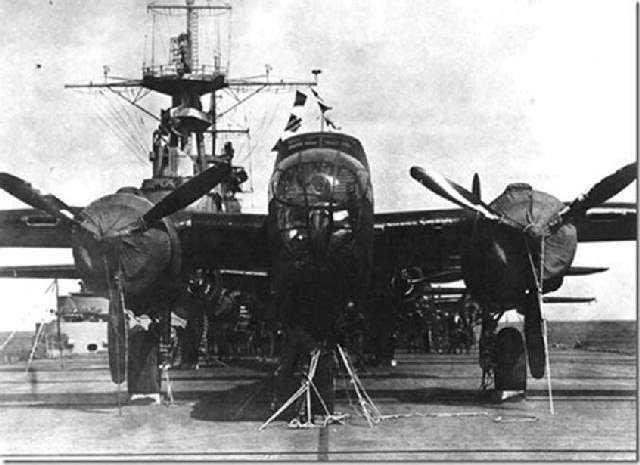
Even though there were no friendly airfields close enough to Japan for the United States to launch a retaliation, a daring plan was devised. Sixteen B-25s were modified so that they could take off from the deck of an aircraft carrier. This had never before been tried -- sending such big, heavy bombers from a carrier.


The 16 five-man crews, under the command of Lt. Col. James Doolittle, who himself flew the lead plane off the USS Hornet, knew that they would not be able to return to the carrier.  They would have to hit Japan and then hope to make it to China for a safe landing.


But on the day of the raid, the Japanese military caught wind of the plan. The Raiders were told that they would have to take off from much farther out in the Pacific Ocean than they had counted on. They were told that because of this they would not have enough fuel to make it to safety. And those men went anyway.


They bombed Tokyo and then flew as far as they could. Four planes crash-landed; 11 more crews bailed out, and three of the Raiders died. Eight more were captured; three were executed.

Another died of starvation in a Japanese prison camp. One crew made it to Russia.


The Doolittle Raiders sent a message from the United States to its enemies, and to the rest of the world:   We will fight. And, no matter what it takes, we will win.

Of the 80 Raiders, 62 survived the war. They were celebrated as national heroes, models of bravery.

Metro-Goldwyn-Mayer produced a motion picture based on the raid; "Thirty Seconds Over Tokyo," starring Spencer Tracy and Van Johnson, was a patriotic and emotional box-office hit, and the phrase became part of the national lexicon. In the movie-theater previews for the film, MGM proclaimed that it was presenting the story "with supreme pride.


Beginning in 1946, the surviving Raiders have held a reunion each April, to commemorate the mission.

The reunion is in a different city each year. In 1959, the city of Tucson,Arizona, as a gesture of respect and gratitude, presented the Doolittle Raiders with a set of 80 silver goblets. Each goblet was engraved with the name of a Raider.


Every year, a wooden display case bearing all 80 goblets is transported to the reunion city.

Each time a Raider passes away, his goblet is turned upside down in the case at the next reunion, as his old friends bear solemn witness.


Also, in the wooden case is a bottle of 1896 Hennessy Very Special cognac.

The year is not happenstance: 1896 was when Jimmy Doolittle was born.


There has always been a plan: When there are only two surviving Raiders, they would open the bottle at last, drink from it and toast their comrades who preceded them in death.

As 2013 began, there were five living Raiders; then, in February, Tom Griffin passed away at age 96.


What a man he was. After bailing out of his plane over a mountainous Chinese forest after the Tokyo raid, he became ill with malaria, and almost died. When he recovered, he was sent to Europe to fly more combat missions. He was shot down, captured, and spent 22 months in a German prisoner of
war camp.


The selflessness of these men, the sheer guts ... there was a passage in the Cincinnati Enquirer obituary for Mr. Griffin that, on the surface, had nothing to do with the war, but that was emblematic of the depth of his sense of duty and devotion:


"When his wife became ill and needed to go into a nursing home, he visited her every day. He walked from his house to the nursing home, fed his wife and at the end of the day brought home her clothes. At night, he washed and ironed her clothes. Then he walked them up to her room the next morning. He did that for three years until her death in 2005."


So now, out of the original 80, only four Raiders remain: Dick Cole (Doolittle's co-pilot on the Tokyo raid), Robert Hite, Edward Saylor and David Thatcher. All are in their 90s.
They have decided that there are too few of them for the public reunions to continue.


The events in Fort Walton Beach marked the end. It has come full circle; Florida's nearby Eglin Field was where the Raiders trained in secrecy for the Tokyo mission. The town planned to do all it can to honor the men: a six-day celebration of their valor, including luncheons, a dinner and a parade.


Do the men ever wonder if those of us for whom they helped save the country have tended to it in a way that is worthy of their sacrifice? They don't talk about that, at least not around other people. But if you find yourself near Fort Walton Beach this week, and if you should encounter any of the Raiders, you might want to offer them a word of thanks. I can tell you from first hand observation that they appreciate hearing that they are remembered.


The men have decided that after this final public reunion they will wait until a later date -- sometime this year -- to get together once more, informally and in absolute privacy. That is when they will open the bottle of brandy. The years are flowing by too swiftly now; they are not going to wait until there are only two of them.

They will fill the four remaining upturned goblets. And raise them in a toast to those who are gone.


Their 70th Anniversary Photo

http://www.shangralafamilyfun.com/galk-o/lnchange.gif

Thursday, May 10, 2018

The REAL Cure To Depression

How Helping a Stranger With a Severed Finger Saved My Life
Story By Kim Porter 

I was suicidally depressed, until a bloody emergency reminded me what I'm capable of.
A
s soon as I sit down on the stoop in front of my friend’s house, my body sags. And not just because of the arduous climb up this ridiculously steep hill. And not just because halfway up the hill my four-year-old daughter Colette collapsed in mutiny, refusing to take another step and I had to lug her the rest of the way on my back. And not just because my friend is late and we’re stuck here waiting as the four p.m. San Francisco fog rolls in, kicking up gritty wind and making the temperature plummet. But because I’m depressed, and every time my body stops moving, melancholia drops anchor.

I try to put on a good face for my kid, but I’m failing. I’ve been this way for months now. When I talk, my voice sounds hollow and far off. When I walk, I drag my feet. When I wake up in the morning, I feel pummeled by the specter of yet another day. And I’ve developed an unsympathetic inner-monologist who narrates my activities, “You’re so depressed, even this donut can’t make you happy. You should probably just kill yourself; nobody would miss you.” It’s as if I’ve split into two people, a middle-aged-sad-sack and a middle-school-mean-girl, and I don’t want to be either of them.
My friend lives at the top of a street so traumatically narrow and steep, drivers, not knowing it’s a dead end, have to back down the hill – sobbing – because there’s no place to turn around. I know, because that happened to me once, which is why I walked here today.
This is Treat Street, a sturdy little avenue that runs across San Francisco, through the Mission District, and ends at Precita Park. But if you go around Precita Park, you’ll find this one last alpine block of Treat, at the top of which I now sit with my ‘C’-shaped spine, aching and navel-gazing. Out of the corner of my eye, I see a man approaching and I think, “Oh, great. Now what?”
“Por favor. Call 911,” the man says. “Finger. Cut.” He authenticates his succinct claim by holding up his blood-streaked fore-arm. With his left hand, he is clenching a wad of handkerchief around his right pinky.
“No. Have. Phone.” I say, as if English is also my second language.
“Have phone,” he says and dips his chin toward his front pants pocket.
I don’t want to stick my hand in there, but the blood does look real, so I gesture for my kid to stay on the stoop and I move toward him.   In his pocket, I find a flip-phone. I slip it out and step back out of arms’ reach, then call 911.
The operator answers and after I give her the address I say, “I’m here with this guy, and he says he cut his finger.”
“Is it bad?” the operator asks.
“Is it bad?” I ask him.
“Si.”
“It’s bad,” I tell her.
“Did he cut it off?”
Now there’s a question I hadn’t thought of. “Did you cut it off?”
“Si.” He sighs, relieved someone finally understands the gravity of his situation.
“Yes. He cut it off.”
“Where is it?” the operator asks.
“Where is it?” My voice goes so high and tight my throat burns.
“Upstairs,” he says and points with his elbow to the house next door.
“Go get it,” she instructs me.
Oh. “O.K.,” I say.
I admonish my kid, “Do not move a muscle,” and I leave her sitting on the stoop as I follow the man toward the house.
Inside, we are immediately greeted by a staircase, which is missing all of its treads. I follow the man up the stairs, balancing on narrow vertical strips of wood, narrating to the 911 operator, “We have entered the premises and are ascending the stairs.” We get to the kitchen and I see a table saw, a stack of lumber, and an arc of blood spatter across the ceiling, but I don’t see the finger.
“We are attempting to locate the finger,” I say, because even in an emergency, silence over a phone line is awkward.
I thought a severed finger would jump right out at me, but I cannot find it. I lift up each foot and look underneath to be sure I’ve not already stepped on it. I’m getting that jumpy, tight-shouldered feeling like when you’ve lost sight of a spider that was on your ceiling a moment ago.
“Do you see it?” I ask him.
He points. With his elbow. At his own finger.
The finger lies disenfranchised on the floor beside the table saw, drained of color, and curved slightly. It looks ashamed of itself, hunched over like a scolded dog. I have to pick it up but I don’t have any rubber gloves or tongs so I rip a paper towel from the roll and lay it over the finger, pinching delicately, the way you might pick up a harmless but terrifying bug, a bug you wouldn’t want to crush but you wouldn’t want to see escape and run up your arm either.
“We have secured the finger,” I tell the operator. 
“Hang tight. The ambulance is on its way.”
I cradle the swaddled finger back down the skeletal stairs, being careful not to squeeze too hard. I don’t want to collapse all the delicate little doo-dads at the business end because I’m assuming they’ll need those when they reattach it.
When we get outside I see that Colette is still sitting where I left her and it’s still daylight, which surprises me, because it felt like we’d been on our finger-recovery mission for hours.
We sit on the stoop, and wait for the ambulance, which we can hear approaching in the distance. We listen to the siren growing louder and louder as the ambulance approaches, and just when we’re expecting to see the flashing lights at the bottom of Treat Street, the siren begins to grow quieter and quieter, as if the ambulance has turned around and is driving away. The man looks at me with the whites of his eyes showing all the way around.
“Sounds like they’re going the wrong way. Are they leaving?” I ask the operator.
After a brief silence she returns with, “They couldn’t find you. The address does not exist.”
I sit up straight. “No! Tell them to come back and drive around the park! We’re on the other side of the park. Drive around the park!”
“It’s O.K.,” I tell the man. “They’ll be here soon.”
I can see all the fear he’s been staving off overtake him. A tear appears on the rim of his eye where it balances for a second before it spills out and runs down his cheek. I don’t know what he’s thinking, but I’m thinking, What if he has a wife and kids depending on him and he can’t go back to work? What if he doesn’t have insurance? Or isn’t in the country legally?
“You’re going to be O.K.,” I say.
He looks dubious.
“You are very strong,” I tell him, and I put my free hand on his saw-dust covered back.
“Gracias,” he says.
“De nada. Esta no problemo,” I say, emboldened enough to risk mangling a little bit of my middle-school Spanish. I rub my free hand in a circle on his back.
The ambulance arrives. They hustle him into the back and they’re off.
Colette and I are watching the ambulance backing down the hill when I realize I’m still holding the finger. I run after them, waving my arm and screaming, “The finger! Stop! The finger!” I hand off the finger to the paramedic and watch as they drive away.
* * *
T
hroughout the evening, I find I can’t stop worrying about the man. I feel invested, but I don’t even know his name. I decide to call the hospital.
“Hi,” I say, trying to sound humble, “I helped a guy who cut off his finger, and I don’t even know his name, but I’m wondering if he came to your hospital.”
The nurse says, “Kim?”
“Ye-ees?” I say, feeling mystified.
“It’s me. Katanya.”
Katanya is the mother of one of my daughter’s classmates. We barely know each other.  I find it miraculous that she recognizes my voice.
She says, “His name is Jose Ramos, and he’s waiting for surgery. Would you like to leave a message?”
“No. I don’t want to bug him. I just wanted to be sure he was O.K.”
The next morning, I wake up into the lull that follows a meaningful day. I feel restless and let down. I don’t know what to do with myself. I decide to call the hospital again.
This time I’m put through to Jose’s room. “How was the surgery?”
“No surgery,” he says. “No enough blood.”
Whatever that means.
“Oh, I’m sorry,” I say, picturing his little guilty bloodless finger. “Do you need anything?”
Jose says, “No, gracias,” and then launches into Spanish. I can’t understand what he’s saying, but I can hear in the tone of his voice the same letting-your-guard-down feeling I feel. Which makes sense. It’s impossible to carry around a person’s chopped-off body part and not feel a little camaraderie. I presume that’s true for the carry-ee as well.
Later that day, as I am pushing Colette on the tire swing at the park I remember that old – allegedly Chinese – proverb about how if you save someone’s life you are responsible for them for the rest of their life. Which never made sense to me before. Shouldn’t the person who got saved owe a perpetual debt and not the other way around? But, today, I get it. It’s a great honor to help someone in need, even if all you did was push three buttons on a phone and carry a couple ounces of former human for fifteen minutes. I want to keep doing it. 
I find I can’t get back to normal, no matter how hard I try – and, frankly, I’m not trying very hard because my old normal was awful, all that sitting sadly in one room or another, staring into space, imagining how much better off the world would be without me—why would I want to go back to that? 
I start keeping a lookout for other people in need of rescuing. I push a stalled car out of the road, I aid a disoriented cyclist when her bike gets clipped by a car, I flag down a security guard in a lobby when I see an elderly man stumbling and clutching his chest, I adopt a dog, 
Then one day, a month or two after the finger incident, I realize I have completely forgotten to be depressed. I’ve been so busy playing the role of local hero that I’ve neglected to drag my feet and stare into space and fantasize about the world without me. I notice that donuts taste good, and my voice sounds normal, and when my body stops moving, melancholia no longer drops anchor.
More than a decade has passed since Jose’s accident. Periodically I put the search terms “Jose” plus “Ramos” plus “finger” into Google on the off-chance that he’s looking for me. I wish I could see him again, to see how he’s getting on without his finger. But more importantly, to thank him, because when he lost his finger, he saved my life.
This story appeared in the May 2018 Reader's Digest


Another story -

A very long time ago I heard this wonderful story about a family that was very concerned about their daughter.  She was depressed and everything they did to help her - was not helping.  Finally they asked a psychology friend what they might do to help their daughter.

His answer?  Buy 100 plants and have her care for them as she finds someone to give them them away to - one by one.  This they did!

About a year later the parents the ran into this psychology friend.  They had a great time catching up!  Then he asked, "What happened with your daughters problem"?

They replied "What problem"?

Service is everything!!

Friday, February 26, 2016

GRATITUDE

This Film Shaped "Everyone Matters": 
GRATITUDE by Louie Schwartzberg


Six minutes of PROFOUND BLISS.
Life-changing, in its eye-opening truth.

Wednesday, September 30, 2015

Paul Harvey " Policeman " One of His Best Narrations

With all the hatred being spewed lately at Police Officers, I found this worth remembering.

"Policeman" by Paul Harvey 
done in the style of that wonderful SUPER BOWL commercial 
"God Made A Farmer" narrated by Paul Harvey. 
This is a tribute to the many police officers who risk their lives daily. 
We should never forget who are the first ones we call, when we are in danger.


Friday, September 11, 2015

9/11 - He Gave His Life For Others

The man who predicted 9/11 gave his life trying to save everyone he could

9/11 Budweiser Commercial - AIRED ONLY ONCE

The story behind the rarely seen 9/11 Budweiser commercial that only aired once


ST. LOUIS, MO (KTVI) - An ad featuring the Budweiser Clydesdales aired only one time during the Super Bowl XXXVI (2002). The horses pay tribute to the memory of the fallen of September 11th with an unforgettable, breath-taking bow. Many have never forgotten the commercial that never aired again.

A-B's creative team came up with the concept and moved heaven and earth to make the commercial. They had to get approval from members of Congress, the ad community and from New York Mayor Rudy Guiliani.

"We filmed in New York City. We had a helicopter going over the Brooklyn Bridge. Mayor Giuliani let us into the city. The only film company of any sort right after 9-11 to actually come into air space with our helicopter to film the Clydesdale the hitch coming into Battery Park and it was amazing...just amazing," said Bob Lachky, former executive vice president of AB Global Creative.

It was amazing, especially considering how New York was a city hurting and on edge. And yet a St. Louis-based company, touched by the pain of the worst act of terrorism on U.S. soil took a risk to help one of our favorite cities and our nation heal.


Friday, October 10, 2014

I Like Me!


“Good friends are like quilts - they age with you, yet never lose their warmth."

I have seen too many dear friends leave this world, too soon; before they understood the great freedom that comes with aging.

Whose business is it, if I choose to read, or play on the computer, until 4 AM, or sleep until noon? I will dance with myself to those wonderful tunes of the 50s, 60s & 70s, and if I, at the same time, wish to weep over a lost love, I will.

I will walk the beach, in a swim suit that is stretched over a bulging body, and will dive into the waves, with abandon, if I choose to, despite the pitying glances from the jet set. They, too, will get old.

I know I am sometimes forgetful. But there again, some of life is just as well forgotten. And, eventually, I remember the important things.

Sure, over the years, my heart has been broken. How can your heart not break, when you lose a loved one, or when a child suffers, or even when somebody's beloved pet gets hit by a car? But broken hearts are what give us strength, and understanding, and compassion. A heart never broken, is pristine, and sterile, and will never know the joy of being imperfect.

I am so blessed to have lived long enough to have my hair turning gray, and to have my youthful laughs be forever etched into deep grooves on my face. So many have never laughed, and so many have died before their hair could turn silver.

As you get older, it is easier to be positive. You care less about what other people think. I don't question myself anymore.  I've even earned the right to be wrong.

I like being old. It has set me free. I like the person I have become. I am not going to live forever, but while I am still here, I will not waste time lamenting what could have been, or worrying about what will be. And I shall eat dessert every single day (if I feel like it).

MAY OUR FRIENDSHIP NEVER COME APART, ESPECIALLY WHEN IT'S STRAIGHT FROM THE  HEART!

I love the age I am. I don't know how many more years I have left so I am enjoying each and every day.

Thursday, July 3, 2014

Our National Flags - We have TWO!

This email forward comes from an awesome web site that has much more information (and more links, too!) if you'd like to check it out here:   Peace time flags and more!

The United States Civil Flag of Peacetime


We the People of the United States, 
actually have two national flags, a military flag and a civil flag for peacetime.
They have several important distinctions and meanings.
Almost all Americans think of the Stars and Stripes "Old Glory" as their only flag.

 The Stars and Stripes originated as a result of a resolution adopted by the Marine Committee of the Second Continental Congress at Philadelphia on June 14, 1777, for use on military installations, on ships, and in battle, directing that a U.S. flag consist of 13 stripes, alternating red and white; that a union be 13 stars, white in a blue field, representing a new Constellation.

Prior to, during the War for Independence, and after under the Articles of Confederation, smuggling was seen as a patriotic duty of the citizens of the thirteen independent and sovereign states, but after the ratification of the Constitution and the establishment of a new nation, smuggling needed to be stopped. The new nation depended on the revenue from customs tariffs, duties and taxes on imported goods in order to survive.

In 1790, with the customs laws firmly in place, Secretary of the Treasury Alexander Hamilton set to work devising adequate means of enforcing the year-old regulations. "A few armed vessels, judiciously stationed at the entrances of our ports," Hamilton suggested, "might at a small expense be made useful sentinels of our laws." Congress concurred, and that year appropriated $10,000 to build and maintain a fleet of ten revenue cutters, which were to be placed under the charge of the customs collectors, whose responsibilities would be enforcement of the tariff laws. Along with financial responsibility, Hamilton demanded that the officers be servants of the people. "They [the officers] will always keep in mind that their Countrymen are Freemen and as such are impatient of everything that bears that least mark of a domineering Spirit."

Nine years later, Congress refined the revenue cutters' role in customs operations with the passage of the Act of March 2, 1799, known as the Customs Administration Act. In particular, Congress determined "the cutters and boats employed in the service of the revenue shall be distinguished from other vessels by "an ensign and pendant, with such marks thereon as shall be prescribed and directed by the President of the United States." Additionally, the Act permitted commanders of revenue vessels to fire at other vessels failing to respond "after such pendant and ensign shall be hoisted and a gun fired by such revenue cutter as a signal." By this act the Revenue Marine (later called the Revenue Cutter Service) ensign served as the seagoing equivalent of a policeman's badge, the distinctive sign of the vessel's law enforcement authority.

The job of designing the distinguishing ensign eventually fell upon Oliver Wolcott, who had replaced Alexander Hamilton as Secretary of the Treasury in 1795. On June 1, 1799, Wolcott submitted his design to President John Adams for approval. Wolcott's proposal featured an ensign of sixteen stripes, alternating red and white, representing the number of states that had joined the Union by 1799, with the Union to be the Arms of the United States in dark blue on a white field. It is significant that Wolcott turned the arrangement of the stripes ninety degrees to vertical to differentiate the new revenue cutter ensign from the U.S. Flag, to denote civilian authority under the Treasury Department, rather than military authority under the War Department.
 Through usage and custom, horizontal stripes had become adopted for use over military posts, and vertical stripes adopted for use over civilian establishments. The Civil Flag, intended for peacetime usage in custom house civilian settings, had vertical stripes with blue stars on a white field. By the Law of the Flag, this design denoted civil jurisdiction under the Constitution and common law as opposed to military jurisdiction under admiralty/military law.
 Although intended just for Customs house usage, the new Civil Flag became adopted by both customhouses and merchants, and others who could afford them, to show their civilian nature and not under military control. The practice of using the Customs Flag as a Civil Flag became encoded in law in 1874 when Treasury Secretary William. A. Richardson required all customhouses to display the Civil Flag.

On May 26, 1913, with the approval of Senate Bill S. 2337, (shortly after the fraudulent declaration by Secretary of State Philander Knox, that the 16th Amendment had been ratified, and during the same weeks that the Federal Reserve system and the IRS were established) the U.S. Coast Guard absorbed the Revenue Cutter and the Life Saving - Lighthouse Services, becoming a part of the military forces of the United States, operating under the Treasury Department in time of peace and as a part of the Navy, subject to the orders of the Secretary of the Navy, in time of war.

The Civil Flag used by the cutter service was modified, placing the Coast Guard insignia on the stripes in the field , and was adopted under Coast Guard authority, losing it's original significance of civilian authority, which by then had long been forgotten. As the Federal government acquired more control over the States and their citizens during and after World War II, by 1951 the original Civil Flag had been phased out completely, it's existence left as an artifact of time in a few old photographs and a rare mention in old books.

Today, the last vestige of the Civil Flag, the U.S. Coast Guard flag, being under the civil jurisdiction of the Department of Treasury during peacetime, is identical to the revenue cutter ensign, but with the service insignia emblazoned on the stripes in the field.
 It is still seen as the shoulder patch of U.S. Customs employees but it too now has the gold fringe signifying Admiralty/Military/Law Merchant jurisdiction.

Monday, May 26, 2014

Memorial Day - Know Your History . . .


 KNOW YOUR HISTORY: 
Memorial Day was started by former slaves on May 1, 1865 in Charleston, SC to honor 257 dead Union Soldiers who had been buried in a mass grave in a Confederate prison camp. They dug up the bodies and worked for 2 weeks to give them a proper burial as gratitude for fighting for their freedom. They then held a parade of 10,000 people led by 2,800 Black children where they marched, sang and celebrated.