Tuesday, August 13, 2013

Gorgeous Photos


This house was designed by Rudy Ricciotti. The unique architecture includes a pool house, which is like a window in the living room where you can enjoy not only swimming in the water, but the person swimming in it with the effect of the outdoor landscape which is reflected through the window. 


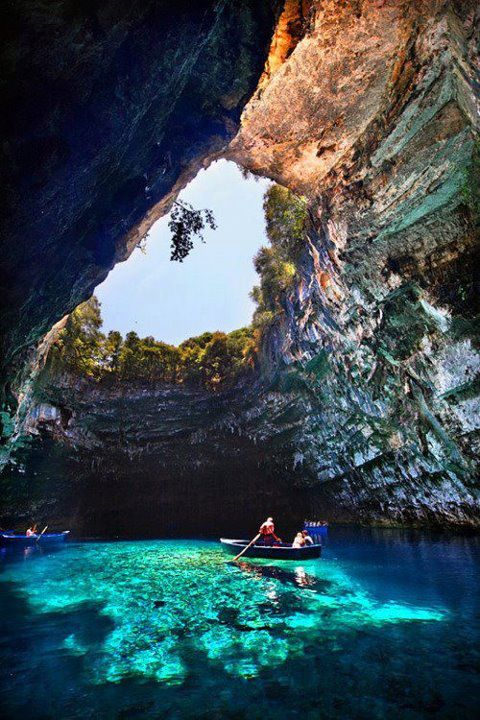
Lake Mellisani on the island of Kephalonia Greece .
How many people can you get in a row boat? (just a thought)
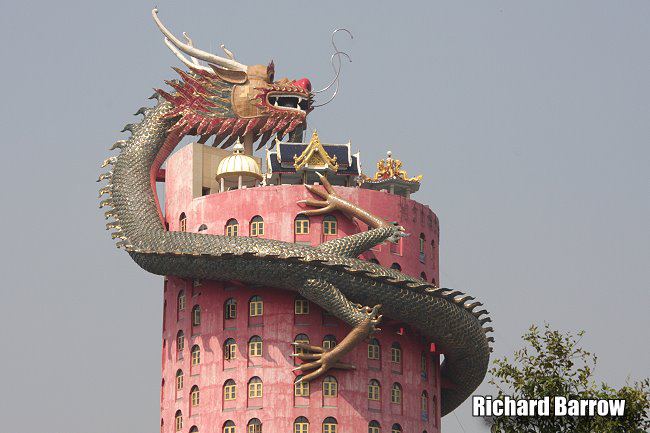
 At Wat Samphran (วัด สามพราน) in Nakhon Pathom Province there is a 17 story building that has a giant dragon climbing to the roof. The head is at the top where there is a shrine and the tail is on the ground floor. The dragon is hollow and it is possible to walk up some sections of it.


The Aiguille du Midi cable car leaves from the centre of Chamonix . It takes visitors up to 3842 m for a stunning view of the French Swiss and Italian alps.  


 Thermal baths inside a cave - Miskolc Tapolca , Hungary  OMG, take me there please.....


 Amazing Norway !!!


 Lake Mellisani on the island of Kephalonia Greece. 
How many people can you get in a row boat? (just a thought)


Paradise ! Jungfrau Mountain Range , Switzerland


Hallgrímskirkja (244 ft), is the largest church and the sixth tallest architectural structure in Iceland. 
(floating on permafrost?)  


 Amazing Constructions..!! Barcelona .


Sea Caves near Benagil Beach , Algarve , Portugal .


Beautiful Display Of The Balance Between Predators & Prey In Nature? 
or (school is in session?)

March 2013

Singing Diva Impersonator

Broadway's Christina Bianco sings "Tomorrow" as
 Celine Dion 
Judy Garland
Barbra Streisand
Kristen Chenoweth
Bernadette Peters
Eydie Gorme and
Julie Andrews 
at The Friars Club


Click on THIS LINK to see an even better video of her singing
"Total Ecliplse of the Heart" with more divas . . . it's great!!

Friday, August 2, 2013

Cute Dog Pics

 Ahh Jeffy!  You're getting so big!  
I love you so much!


 "And I brought my horsey to sleep 
at your house Nana.
I always sleep with my horsey".


C-c-can I use your potty next time?


"I think -- I swollowed the cat"!!
Take a DEEP breath and hold it please".
"Meowwwwww"


 "Hang a left. Road work ahead".


"Oh - Oh! - Over to the left a little, up . . . up up some more
Right There!!  Oooo that feels good"!!


IN GOD WE TRUST

"If you always do what you've always done,
you'll always get what you've always got".

MAKE IT A GREAT DAY!!

April 2013

The Ajanta Caves

Two thousand two hundred years ago work began on an extensive series of cave monuments in Maharashtra, India.  Over a period of hundreds of years, thirty one monuments were hewn piece by piece from the rock face.  Then, some speculate around the year 1000 AD, they fell in to disuse.  Dense jungle grew around, hiding the caves away from human eyes.


The Ajanta caves lay undisturbed for hundreds of years.  Then, in April 1819, during the time of the British, Raj, an officer with the unassuming name of John Smith, came rediscovered a doorway to one of the temples.  He had been hunting tigers something of which many would disapprove today but his next step was disrespectful in the extreme.  He vandalized one of the walls with his name and the date, something which is still visible today.


One can only imagine what went through Smith's head when he made his find. Such a rediscovery did not remain secret for very long.  Soon, European and Indian tourists were thronging to the site after extensive tidying up.  After all, the caves had been home to bat, birds and larger animals for hundreds of years.  The Ajanti Caves had been returned to the world of the living.


 The nearest human habitation is Ajinhā, a tiny village a few miles away from the caves.  The sanctuaries, which are known as chaytia-girhas date from the second century before Christ.  They were used primarily as prayer halls and are similar to an extent to the contemporary Roman designs of arch and column.  However, these sanctuaries were carved from the immense rock face of the caves, with chisels and, indeed, bare hands.


The first caves were hewn from the bare rock at the time of The Sātavāhana Empire which started around 230BC.  The Sātavāhanas brought peace to India after several foreign invasions and the decline of the previous, Mauryan Empire.  It is not without irony, then, that they were rediscovered by a contemporary invader and representative of a foreign empire.


 Although there is widespread debate about the time at which the second period of building took place, most now agree that it was probably during the reign of Harishena, from 460AD and over a period of around twenty years.  This architectural flowering saw the creation of twenty temples which were used as monasteries.


 Although there is widespread debate about the time at which the second period of building took place, most now agree that it was probably during the reign of Harishena, from 460AD and over a period of around twenty years.  This architectural flowering saw the creation of twenty temples which were used as monasteries.


 They were created using an ancient method.  The surface was chiseled so it was rough and could hold plaster which was then spread across the surface.  Then the master painter would, while the plaster was still wet, commence his work.  The colors soaked in to the plaster and so became a part of the surface.  Although this meant that it would not peel off as easily, perhaps not even the painters foresaw the temples persevering for over two thousand years.

 No one knows for sure when and why the caves were abandoned – whether it was a gradual desertion of some event of political and social magnitude took place which precipitated the neglect and final vacation of the site.


Yet for hundreds of years the place remained forsaken, to be rediscovered that fateful day in 1819 by John Smith.


AMAZING, ISN'T IT?!!!

April 2013